An Open Educational Resource
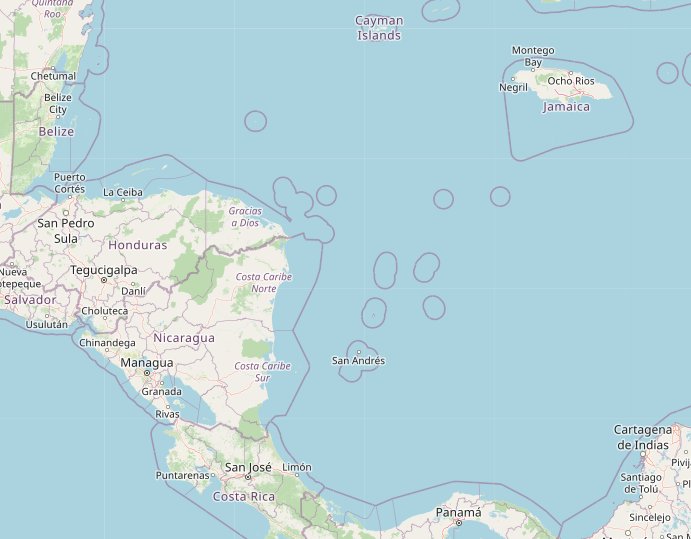
“We are the Raizal People/Somos el pueblo raizal” is an open educational resource (OER) site to learn about and teach the history and culture of the Archipelago of San Andrés, Providencia, and Santa Catalina. These islands are part of Colombia. The descendants of its original permanent inhabitants are known as Raizales or the Raizal People in English and Creole to reflect their autochthonous identity and fiercely resist efforts to diminish their Anglophone Protestant Afro-Caribbean heritage. Despite some scholarly attention to the communities along the Caribbean coasts of Central America and the adjacent insular territories from the Bay Islands (Honduras) to the San Blas Islands (Panama), the experiences and histories of the southwestern Caribbean and their diasporic communities have not received similar attention as their counterparts in the eastern Caribbean, though experiencing similar histories of colonization, slavery, agro-export exploitation, migration, and interethnic and racial relations. This OER site invites scholars, students, and people invested in Caribbean Studies to become familiar with this understudied people and place.
How to navigate the website:
The website invites visitors to click the Exhibit tab to explore a snapshot of Raizal history. It includes an introduction to the digital exhibit. To begin the exhibit, click on the hyperlink title on each image to read about their history. The sum of the exhibit highlights the cultural, political, and economic transitions across the twentieth century, which mirrors but also departs from other places in the greater Caribbean. The exhibit includes a curated collection of photographs, newspaper clippings, oral histories, and original manuscripts from various repositories within and outside Colombia. To access lesson plans for college and secondary school educators who would like to incorporate the history and culture of these islands into the classroom, click the Teaching Resources tab. Then, view or download an overview of the module and three lesson plans. The lesson plans take an interdisciplinary approach to introduce the history and culture of these islands to readers and students. One lesson plan addresses historical memory and how it intersects with the present to shape perceptions of the past and even the production of contested historical narratives. It also wrestles with the environmental consequences of mass tourism as an extractive economic activity, which has particular resonance in an age of ecological crisis.

The Principal Researcher
My name is Sharika Crawford. I am a social and late-comer environmental historian. My primary research has focused on the lived experiences of people of African-descended populations, specifically on and around San Andres and Providencia Islands over the past two decades. I am a Professor of History and the inaugural Speedwell Professor of International Studies at the United States Naval Academy, an honor I will hold until 2028.
For more about me and my work, review my professional website: http://www.sharikacrawford.com.
The Andrew W. Mellon Foundation via the Digital Library of the Caribbean (dLOC) supported the creation of this website and instructional materials as part of the Open Educational Resources (OER) in Caribbean Studies program.
theraizalpeople
Proudly powered by WordPress
 theraizalpeople